Samuel Adams Winter Classics Variety Pack

posted on November 2, 2010 at 4:17 pm by Ken Valley in Beer Reviews,Craft Beer

Samuel Adams Winter Classics

Samuel Adams Winter Classics

Note: this info is for the 2010 version of the Winter Classics pack. The 2011 pack is located here.

Now that the calendar has turned to November, many breweries are starting to release winter beers.  Maybe it’s just me, but letting go of the malty goodness of a fall beer and jumping into spicy winter beers makes me wish it was still fall.  Spiced beers have never been a favorite of mine (I’m looking at you, pumpkin ale), but luckily Samuel Adams hasn’t gone overboard with the spices in this year’s Winter Classics Variety Pack.

In the pack, there are 2 bottles each of:

  • Boston Lager
  • Holiday Porter
  • White Ale
  • Chocolate Bock
  • Winter Lager
  • Old Fezziwig Ale

Looking through the pack, the only one I would consider unpleasantly spiced would be Old Fezziwig Ale, but luckily, Samuel Adams has learned to turn down the spices a bit to make all of them drinkable.  I like the fact that the Chocolate Bock has been included, and the Cranberry Lambic has been removed.  It’s also good to see an appearance from the White Ale, since it’s no longer the Samuel Adams spring seasonal beer.

Have you tried the Winter Classics Variety Pack?  Which ones in the pack do you like?  Which ones don’t you like?

What is Decoction?

posted on October 25, 2010 at 11:09 am by Ken Valley in Craft Beer,Homebrewing

Boiling

Boiling

Toward the end of the fall beer season, I like to look back and reflect on how great Oktoberfest beers are.  They have a great malty, almost burnt-caramel flavor to them.  This is because many of these beers use a process called “decoction”.  This is when about 0ne-third of the resting mash is scooped out, boiled, then returned to the original mash.  This raises the temperature to a specific level, achieving a higher resting temperature to activate different enzymes.

Decoction mashing was widely used in Europe, specifically Germany, before the use of thermometers because taking out a portion of the mash and boiling it (a constant temperature) successfully allowed the specific temperature values to occur.  In addition to this, boiling the grains also made extraction of the starch easier by breaking the cell walls of the grain.  Today, this is not as necessary, because most brewing grains are well-modified, so the starches are easily available for starch to sugar conversion.

Oktoberfest

Oktoberfest

Kind of a “side-effect” of this style of mashing was the introduction of complex, strong caramel flavors from the boiling, called a maillard reaction, producing melanoidins.

These are some of the flavors found in several malt-forward beer styles, such as Oktoberfests, marzens, or bocks.  Samuel Adams also uses this type of technique for the Boston Lager.

The decoction process is not used as much today because it is extremely time consuming (up to 3-4 times as long), and is logistically very difficult in large scale breweries.  For the homebrewer, however, it may be a process worth exploring.

Have you heard of decoction mashing?  What is your take on the process?

Peace Tree Cornucopia

posted on October 18, 2010 at 9:49 am by Ken Valley in Beer Reviews,Craft Beer

Peace Tree Cornucopia

Peace Tree Cornucopia

I recently had the chance to try Peace Tree Brewing’s Cornucopia.  It is a saison with sweet corn and corn stalks.

Being a fan of saisons, I was excited to sample Peace Tree’s interpretation. It had a slightly spicy aroma.  The first taste was a bit sweeter than other saisons I’ve had, and had a hint of corn flavor.  The finish was clean, but it left an “interesting” aftertaste.

I held back on my original (not as favorable) review of this, and I’m glad I did.  Here’s why: I found several things that made drinking this beer a better experience.

  1. It was better fresh.  The bottles I had at the beginning of the season and at the beginning of six-packs were much better than those during the fall and at the end of the pack (unless I drank all of them in a few days time).
  2. It was much better with the yeast mixed in, so pour it into a glass, swirl around what’s left in the bottle, and pour the sediment into the glass.

Overall, it was a good saison, but it’s still not my favorite Peace Tree offering.

Have you had Cornucopia?  What did you think?

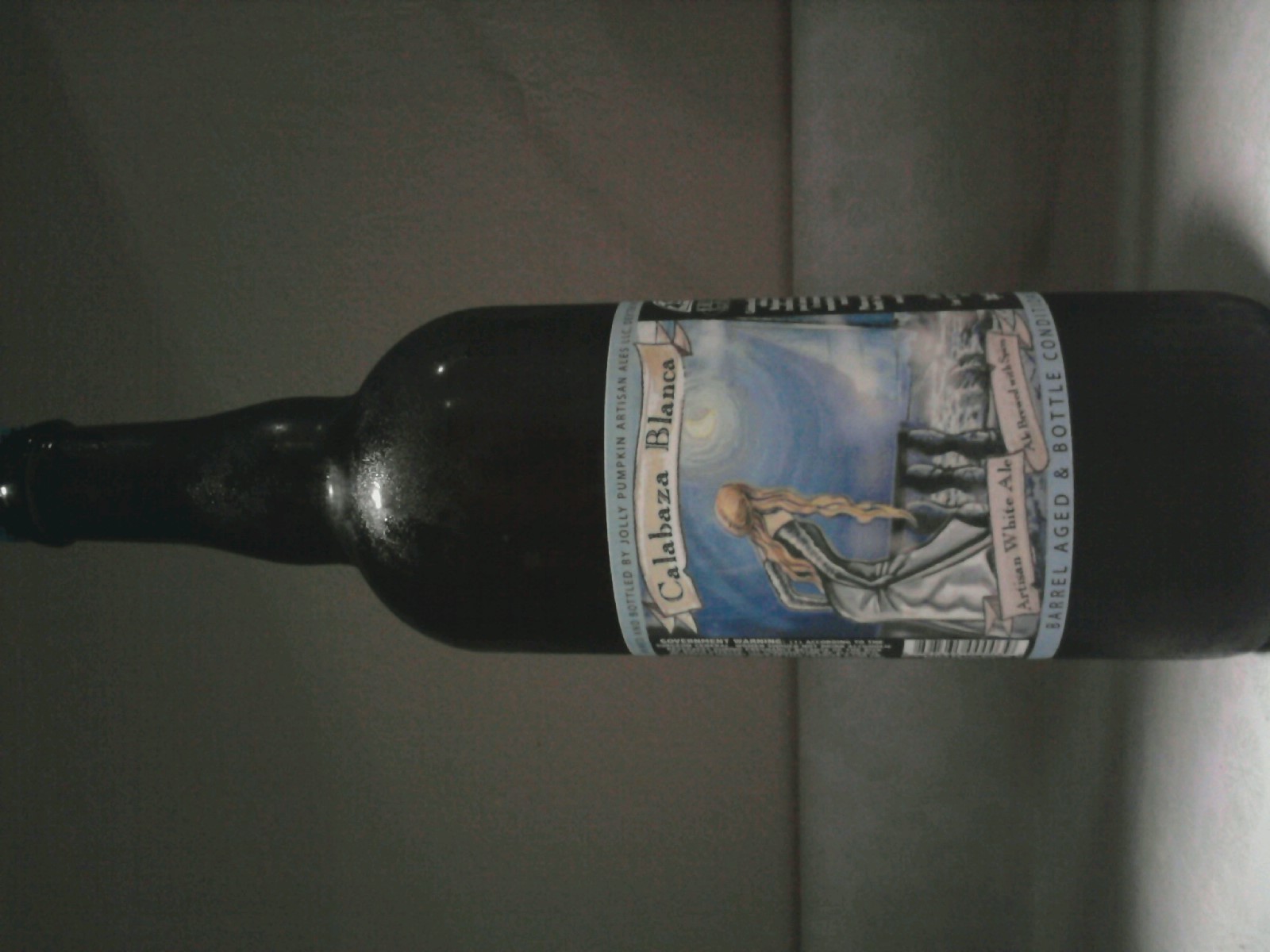
Jolly Pumpkin Calabaza Blanca

posted on October 13, 2010 at 3:24 pm by Ken Valley in Beer Reviews,Craft Beer

Jolly Pumpkin Calabaza Blanca

Jolly Pumpkin Calabaza Blanca

While most of the beer I have enjoyed lately have either been Oktoberfests (one of my favorite styles), or some of my homebrewed beer (such as my recent Harvest Ale), I recently had a chance to sample Calabaza Blanca, one of the offerings from a new-to-Iowa brewer, Jolly Pumpkin.

It is Belgian-style witbier, and I felt it was a perfect example of the style.  It was light and refreshing, with a bit of a tart flavor. It did smell slightly fruity, and had a hint of a ‘sour’ scent to it. The finish was light and refreshing.  It was a great beer, and hope to see more around soon.

Have you had Calabaza Blanca?  What did you think?

Spontaneously Fermented Beer

posted on October 7, 2010 at 10:33 pm by Ken Valley in Homebrewing

Coolship

Coolship

I’ve been brewing for over two years, and I’ve made everything from Pale Ales to Stouts, Red Ales to Belgian beers.  I felt it was time for a challenge, so I decided to create a spontaneously fermented ale, similar to a Belgian Lambic beer.

It started yesterday, when I brewed a very light beer, with a bit of organic wheat from the local co-op.  The wheat, which has not been malted, is used for the long fermentation by the natural yeasts.  Since lambics do not have any hop profile (bitterness, flavor, or aroma), low amounts of aged hops are added only for antiseptic properties.  I decided to use what was left of my homegrown hops, dried and aged to reduce the amount of bitterness displayed in the beer.

After the beer had been brewed, I poured it into several aluminum roaster pans on our three-season porch.  Then I opened the windows, and let the breeze in.  This is similar to the Belgian brewers, who pump the boiling hot wort into a device called a coolship (the Americanized way to spell it).  The liquid is allowed to cool overnight, then placed in a fermenter, usually oak barrels.

Spontaneously fermented beers take at least one year to mature, because the wild yeasts and bacteria take a very long time to do their thing.

Have you ever tried to make a Lambic or a spontaneously fermented beer?  What was your result?

EDIT: This beer and the technique used were featured on the October 20, 2011 episode of Basic Brewing Radio.

« Previous — Next »